Personal Injury
Auto Accidents
Unwavering commitment to criminal defense, traffic violations, DUI, family law and personal injury cases with 202 years of combined experience.
Get Help Now


Car Accident Attorneys in Virginia

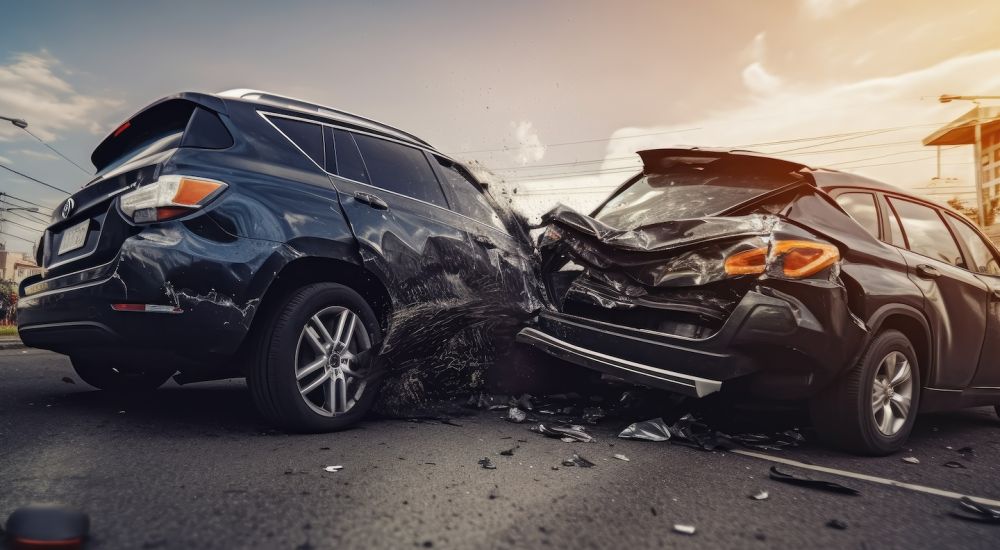
Two cars parked, related to car accident

Car accidents can leave victims with extensive injuries, and they can put families into precarious financial situations. At Randall, McClenney, Daniels & Dunn, PC, we are here to help if you need a Virginia car accident attorney.

Our skilled and experienced team will investigate your case and work to secure full compensation for your claims. We have no problem standing up to aggressive insurance carriers to make sure you are taken care of, and we will take a case to trial if necessary.

Why Choose Randall, McClenney, Daniels & Dunn, PC for Your Virginia Car Accident Case

When you are dealing with a serious injury after a Virginia crash, you want an attorney who knows the courts where your case will be heard, who has tried these cases against the insurers you are about to face, and who will not push you into a quick settlement just to clear the file. At Randall, McClenney, Daniels & Dunn, PC, we built a Hampton Roads and Southside Virginia practice on that principle. We try cases.

After a serious auto accident, it is not always clear what steps to take or whether you need an attorney. What may seem like a straightforward claim can involve disputed fault, delayed injury symptoms, insurance company pressure, and questions about the full value of your losses. Many injury victims do not have the time, tools, or access needed to investigate a crash while also focusing on their recovery.

Randall, McClenney, Daniels & Dunn, PC helps car accident victims build organized, evidence-based claims from the start. Our attorneys can gather the information needed to support liability, review the impact of your injuries, communicate with the insurance companies, and prepare your case for settlement negotiations or trial when needed.

Our team may assist with important parts of your claim, including:

  • Obtaining evidence that may help prove liability, such as vehicle black box data, eyewitness statements, photos, video footage, accident reports, and related records
  • Helping document your injuries through medical evaluation, treatment records, and ongoing care information
  • Working with economic professionals to evaluate medical expenses, lost income, future costs, and other losses connected to the crash
  • Negotiating with the parties involved to pursue a fair settlement or preparing the case for trial when litigation is necessary

When you work with Randall, McClenney, Daniels & Dunn, PC, you have a legal team focused on protecting your rights, preparing your case with care, and helping you move forward after a car accident.

Client Testimonials

“They were very efficient in handling my case. They managed everything remotely since I do not live in the state of Virginia. I am truly grateful to the attorney and his team for helping me with my case.” — Ashley M.

“The best lawyer there is! Hire him now if you are in trouble with the law! HIGHLY RECOMMENDED! The staff were wonderful! Communication was phenomenal. I didn’t have to worry about everything. Thank you for taking care of me!” — Mel C.

“They were wonderful at keeping in touch and giving updates on my case. Super easy to work with, super professional, and definitely worth it.” — Meagan A.

How Virginia’s Pure Contributory Negligence Rule Affects Your Car Accident Claim

Virginia is one of only four states, plus the District of Columbia, that still applies the pure contributory negligence doctrine to personal injury claims. The rule traces to Baskett v. Banks, 45 S.E.2d 173 (Va. 1947), and Virginia courts have refused to abandon it for the comparative negligence approach the rest of the country adopted decades ago. For an injured driver in a Virginia crash, that means any contributory negligence found by a jury, even a small share, eliminates the entire claim against the at-fault driver and the at-fault driver’s insurer.

This is why what you say in the first 24 to 48 hours after a crash matters more than most injured drivers realize. Statements you make to police at the scene, to bystanders who become witnesses, and to the at-fault driver’s insurance adjuster on a recorded call all become part of the evidentiary record. An at-fault insurer reviewing that record will look for any fact, sentence, or admission that supports a contributory negligence defense, because the defense does not have to prove you caused the crash. The defense only has to prove you contributed to it.

The 1% Bar to Recovery

Pure contributory negligence is exactly what the name says. A jury that finds the injured driver one percent at fault returns a verdict for the defendant, and the injured driver recovers nothing. In Virginia, it ends the case. Drivers in Hampton Roads and Southside Virginia who assume their case is strong because the other driver was clearly more at fault often learn this rule the hard way after settlement negotiations break down.

Common Causes of Car Accidents in Virginia

Across the cases this firm sees in Hampton Roads and Southside Virginia, a small set of behaviors cause most collisions. The pattern recurs:

  • Distracted driving, primarily phone use behind the wheel, including texting, navigation app interaction, and hands-free voice commands
  • Impaired driving, including alcohol, prescription medication, and recreational cannabis
  • Excessive speed and aggressive driving, frequently charged as reckless driving under Virginia law when the speed is 20 mph over the limit or the driving behavior endangers others
  • Failure to yield at intersections, particularly left turns across oncoming traffic, and rolling stops at four-way intersections
  • Following too closely, the cause of most rear-end collisions on I-64, I-264, I-664, and the Hampton Roads Bridge Tunnel
  • Fatigue and drowsy driving, especially among military commuters and shift workers in the Hampton Roads region

Common Injuries in Virginia Car Accidents

Man in car with hand on neck, reflecting

In a Virginia personal injury case, the medical record is the central evidence of damages. A delay in seeking treatment after a crash gives the at-fault insurer a clean argument that the injury was not caused by the crash, or that it was less serious than claimed. That is true even when the injured driver feels fine at the scene and walks away. Some of the most serious post-crash injuries do not present symptoms immediately, which is why a full medical evaluation should follow every collision, regardless of how the body feels in the first hours.

The injury categories the firm sees most frequently in Virginia auto accident claims include:

  • Traumatic brain injuries, including concussions and post-concussion syndrome, where symptoms often emerge days or weeks after the crash and require neurological evaluation to document
  • Whiplash and cervical soft-tissue injuries, the most common rear-end collision injury, often dismissed by insurers as minor despite producing chronic pain and reduced range of motion
  • Broken bones, particularly wrist, rib, and femur fractures from steering wheel and dashboard impacts
  • Internal organ damage from blunt-force trauma, which can be undetectable without imaging, and life-threatening if missed
  • Burns from airbag deployment, fuel fires, or electrical shorts in modern vehicle systems
  • Lacerations and crush injuries to the lower extremities, especially in side-impact and T-bone collisions

The legal value of any of these categories depends on the medical documentation linking the injury to the crash and the prognosis for recovery, not on how the injury looked in the emergency room photos.

How a Car Accident Lawyer Proves Fault Under Virginia Law

The injured driver in a Virginia car accident case carries the burden of proving the other driver’s negligence by a preponderance of the evidence, and must also defeat any contributory negligence defense the at-fault insurer raises. Both halves of that burden have to be carried at the same time. Building the case for the other driver’s fault is not enough on its own when the same evidence is being scrutinized for any fact that could be turned into a 1% finding against the injured driver.

The evidence pipeline in a Virginia car accident case typically pulls from several sources at once. Police accident reports establish the initial fact pattern and the responding officer’s assessment of fault, including any traffic citation issued at the scene. Eyewitness statements are taken before memories degrade. Photographs and video from intersection cameras, business surveillance, dashcams, and bystander phones capture the physical record. Vehicle event data recorder downloads, often called black box data, document speed, braking, and steering inputs in the seconds before impact. Medical records connect the injury to the crash through the treating physician’s diagnostic chain.

Compensation You Can Recover After a Car Accident in Virginia

Virginia recognizes three categories of damages in personal injury cases: economic, non-economic, and, in narrow circumstances, punitive damages. The first two flow from the underlying negligence. What the case is actually worth depends on the evidence supporting each category, the severity of the injuries, the strength of the contributory negligence defense, and the limits of available insurance coverage.

Economic Damages

Economic damages cover documented losses with paper trails attached. That includes emergency department charges, hospitalization, surgery, rehabilitation, future medical care projected by treating physicians, lost income from missed work, and lost earning capacity if the injury prevents return to the prior occupation. Each category requires its own evidentiary chain, including medical bills, employer wage-loss statements, and expert testimony for projected future losses.

Non-Economic Damages

Non-economic damages compensate for human losses that do not appear on a balance sheet. The categories include physical pain, emotional distress, loss of enjoyment of life, disfigurement, and scarring. Non-economic damages are often the larger portion of the recovery in serious-injury cases, and they are also the categories at-fault insurers contest most aggressively because there is no invoice to point to.

Punitive Damages in Cases of Egregious Conduct

Punitive damages are available in Virginia in a limited number of cases when the at-fault driver acted with willful, wanton, or reckless conduct that goes beyond ordinary negligence. Drunk driving crashes are the most common example, particularly when the driver has a BAC greater than 0.15. Va. Code § 8.01-38.1 caps punitive damages at $350,000 in most personal injury actions, regardless of how many defendants are found liable.

Dealing with Insurance Companies After a Virginia Car Accident

The at-fault driver’s insurance adjuster is not a neutral party. The adjuster’s job is to limit what the insurer pays. Recorded statements from the injured driver are designed to capture admissions an insurer can use to support the contributory negligence defense discussed earlier on this page, including any statement about speed, attention, or pre-crash behavior that can be reframed as fault.

Most Virginia personal injury attorneys advise injured drivers not to provide a recorded statement to the at-fault insurer until after consulting counsel, and even then, only on counsel’s advice about what is permitted to discuss.

How Long Do You Have to File a Car Accident Lawsuit in Virginia?

Va. Code § 8.01-243 imposes a two-year statute of limitations on personal injury claims in Virginia, running from the date of the accident. Missing the two-year deadline is final. The court will dismiss a personal injury lawsuit filed even one day late, and the substantive merits of the claim become legally irrelevant after the limitations period expires.

Three exception patterns affect the standard two-year deadline, and each requires its own attention.

  • Claims against a Virginia city, town, or county are subject to a separate, shorter written-notice period that runs alongside the two-year statute of limitations. The notice must be served on the locality before any suit is filed, and the current notice window varies by jurisdiction and should be confirmed for the specific locality before filing. And in many cases, these entities are immune for suit except under limited circumstances.
  • Wrongful death claims have their own two-year limitation running from the date of death, not the date of injury.
  • For minors, the limitations period is tolled until the minor reaches age 18, at which point the standard two-year clock starts.

Each of these exceptions narrows what looks like a generous two-year window into something a serious-injury client cannot afford to misjudge.

What You Should Do After Being Injured in a Car Accident

Couple next to a parked car, possibly

The aftermath of an automobile accident can be overwhelming, especially if you or a family member has been seriously injured. Taking the right steps early can help protect your health and strengthen any future legal claim.

  1. Call 911 so law enforcement can file a police report and emergency responders can treat any visible injuries.
  2. Seek medical attention right away, even if you feel fine. Some serious injuries, like traumatic brain injuries and whiplash, are not immediately apparent.
  3. Take photos and videos of your injuries, vehicle damage, skid marks, road conditions, and anything else that shows how the crash occurred.
  4. Ask nearby businesses or witnesses if any surveillance or cellphone video is available.
  5. Get the names and contact information of any witnesses.
  6. Exchange insurance information with all involved drivers.
  7. Limit what you say to the insurance company. Provide only basic facts and avoid recorded statements.

Follow your doctor’s instructions and attend all follow-up appointments.

Contact a personal injury attorney as soon as possible to protect your rights and help build your case.

Take the First Step Toward Compensation Today

If you or someone you love was injured because another driver acted carelessly, it is important to get legal guidance as soon as possible. A car or truck accident can leave you dealing with medical bills, missed work, pain, vehicle damage, and questions about what happens next. Randall, McClenney, Daniels & Dunn, PC can review your situation, investigate the details of the crash, communicate with the insurance company, and help you understand the compensation that may be available under Virginia law.

When you need a car or truck accident attorney in Virginia, contact Randall, McClenney, Daniels & Dunn, PC to discuss your case. You can reach the firm through our online contact form to request a consultation or call 757-600-6135. The team represents accident victims in and around Southampton, Emporia, Brunswick, Suffolk, and nearby Virginia communities.

Written By Asha Pandya

Personal Injury Attorney
Asha Pandya

Ms. Pandya has more than a decade of experience as a defense attorney, where she routinely defended her clients with the same steadfast determination that made her a formidable prosecutor. She is a veteran of dozens of jury trials excelling at protecting her client’s rights by holding authorities accountable to achieve the best possible outcome.

Asha Pandya

$100,000

Recovered for a Suffolk woman injured in a motor vehicle accident

$150,000

Recovered for an Emporia woman injured in a motor vehicle accident

$49,028

Awarded at trial for a Southampton woman, almost double the $28,400 settlement offer.

We Don’t Settle for Less Than You Deserve


When insurance companies under value claims, we fight back

$100,000

Recovered for a Suffolk woman injured in a motor vehicle accident

$150,000

Recovered for an Emporia woman injured in a motor vehicle accident

$49,028

Awarded at trial for a Southampton woman, almost double the $28,400 settlement offer.

Meet Our Experienced Auto Accidents Attorneys


Randall, McClenney, Daniels & Dunn, PC is represented by a dedicated team of local attorneys, each with a proven track record in their respective fields.